Find more New Haven Museum Events
Description
Connecticut oysters are so good they were designated the state shellfish in 1989. Historians will tell you, however, that this was not always the case. New Haven Museum will kick off the summer season of the Pardee-Morris House with two fascinating accounts of one of our oldest heritage foods and demonstrate how the modest mollusk is helping to preserve the Connecticut coastline, during, “Aw, Shucks! The Extraordinary History & Outlook for CT Oysters.” The NH250 program will be held on Sunday, June 7, 2026, 12:30 – 3:00 p.m. Weather updates on Facebook, Instagram and https://www.newhavenmuseum.org.
At 12:30 p.m. Tim Macklin will demonstrate the critical role oysters play in our ecosystem, and how the nonprofit he cofounded, Collective Oyster Recycling and Restoration (CORR), is taking a deep dive into how oyster shells are helping to preserve the coastline for future generations.
At 2 p.m., Brett Palfreyman, associate professor of American history at Wagner College, will present the story of how the bountiful bivalves that were once a dietary staple were declared unsafe to eat by the early 1900s (after years of overharvesting and increasing pollution), during his presentation, “Bringing Oysters Back to the Northeast.”
Macklin ‘s presentation, “Shell Recycling & Oyster Habitat Restoration,“ will offer insight into shell recycling, oyster-habitat restoration, and the environmental benefit oysters bring to Long Island Sound. Macklin maintains that oysters contribute significantly to the natural environment by forming reefs that provide new habitats for hundreds of marine species. “They improve water quality, promote biodiversity, stabilize shorelines, and support both commercial and recreational shell-fishing communities,” he says.
Despite their importance, shells are in short supply, and substantial quantities are discarded, increasing waste instead of being recovered and recycled. “My partner and I were surprised that shell recycling was not being implemented in Connecticut to support the restoration of oyster habitats in Long Island Sound,” Macklin says. “Following a successful pilot program in Fairfield, we expanded the initiative statewide in 2023 and developed CORR.” The environmental non-profit now collaborates with 21 municipalities, 51 restaurants and seafood businesses, and 7 oyster festivals to recover and recycle nearly 964,000 pounds of shell to date and helps provide homes to millions of baby oysters.
Palfreyman notes that New York Harbor was once the greatest oyster habitat on the planet. For centuries, oystering was a booming industry, providing sustenance and jobs for New Yorkers of all classes and backgrounds. The same was true further up the coast, in New Haven.
But by the early 1900s, after years of overharvesting and increasing pollution, officials finally declared New York Harbor oysters unsafe to eat in 1927. In Connecticut, increases in coastal human population, industrialization, pollution, marine traffic, and overfishing threatened oyster beds after 1920, with production falling drastically after 1950.
In the last decade, however, organizations have initiated campaigns to bring oysters back to the region. Palfreyman points out that groups like the Billion Oyster Project, which aims to seed one billion oysters by the year 2050, hope that a restored oyster population will once again provide critical environmental services to the local ecosystem. First, as filter feeders: oysters filter as much as 50 gallons each per day. Oysters are also ecosystem architects, Palfreyman says, building complex reef structures that provide habitats for fish, birds, and other marine life. Perhaps most importantly, as sea levels rise and weather becomes ever more severe, oyster reefs provide natural defenses to protect shorelines from storm surges and erosion.
Visitors are welcome to bring chairs and picnics and stay for the afternoon. Free tours of the historic house are available 12-4 p.m. New Haven Museum thanks community partner WSHU 91.1 FM for supporting the 2026 summer season.
About Tim Macklin
Macklin is the co-founder, president, and shell recovery and recycling manager of Collective Oyster Recycling and Restoration (CORR). He co-founded CORR in 2023 with his partner, Todd Koehnke. Previously, he served for eight years on the Fairfield Shellfish Commission and created a pilot shell-recycling program in Fairfield. He oversees and participates in all aspects and management of the day-to-day operations of CORR, including shell recovery, recycling, restoration, outreach, education, grants management, and administration.
About Brett Palfreyman
Palfreyman is an associate professor of American history at Wagner College in New York City. He received a B.A. from Boston College and a Ph.D. from Binghamton University. He has published a variety of articles in scholarly and popular sources, including the Journal of the Early Republic and the New York Times. He is working on book projects on the fate of loyalists who chose to remain in the states after the American Revolution, and the history of beer and brewing in New York City.
About NH250
This event is part of NH250, an ongoing series of programming developed by New Haven Museum to complement “America 250” and the anniversary of the Declaration of Independence. The series will highlight inclusive, local, and lesser-known stories, connecting past and present.
About the Pardee-Morris House
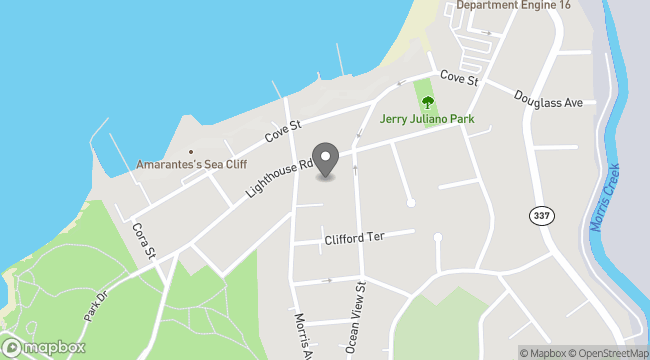
Located at 325 Lighthouse Road, in New Haven, the Pardee-Morris House dates from about 1780, and is listed on the State and National Register of Historic Places. Built by Amos Morris around 1750, the house was burned by the British during their raid on New Haven in 1779 and rebuilt and expanded by the Morris family. In 1918, William S. Pardee, a descendant of the Morris family, willed the property to the New Haven Colony Historical Society, today the New Haven Museum. For a complete list of summer events at the Pardee-Morris House, visit: http://newhavenmuseum.org/visit/pardee-morris-house/ For New Haven Museum’s event calendar: http://newhavenmuseum.org/visit/events-calendar/ Sign up for e-blasts at info@newhavenmuseum.org.
About the New Haven Museum
The New Haven Museum, founded in 1862 as the New Haven Colony Historical Society, is located in downtown New Haven at 114 Whitney Avenue. The Museum collects, preserves and interprets the history and heritage of Greater New Haven and through its collections, exhibitions, programs and outreach brings more than 375 years of the Elm City’s history to life. For more information visit http://newhavenmuseum.org or @newhavenmuseum or call 203-562-4183.
Date & Time
Sun, Jun 7, 2026 12:30 PM - 3:30 PM
Venue Details
Pardee-Morris House
325 Lighthouse RoadNew Haven, Connecticut 06510