Find more New Haven Museum Events
Description
Given the chance, what would you say to family members loved and lost, whose stories begin to feel distant? For Ugandan-American poet, teacher, and New Haven Museum (NHM) Educator Rohanna (Ssanyu) Delossantos, the answer is to create verse giving voice to a universal longing: to commune with the culture and people of memory and family lore. Delossantos will present a free, all-ages program merging poetry and still-life drawing in, “The Marabou Who Crossed the Sea,” at the Pardee-Morris House on Sunday, August 9, 2026, at 2 p.m. For weather updates check our Facebook/Instagram pages or visit https://www.newhavenmuseum.org.
Delossantos’s superpower is making complex histories accessible through art. At NHM, she has developed and led a variety of family programs since 2019. Basing the “The Marabou Who Crossed the Sea,” program on her chapbook of the same title, Delossantos will give a reading and then offer still-life scenes based on the objects and birds mentioned in her book for adults and kids to color in their own way. The event will include a Q&A and a book signing.
Delossantos, whose writing is penned using her middle name, Ssanyu, says that although her poems are fictionalized, they all have biographical elements, often pulling from her memories of visiting Uganda for the first time in her early 20s. Her work creates a complex tapestry exploring community histories: late-20th century immigration, the Ugandan Diaspora, post-colonial Africa; along the way she weaves in threads of maternal relationships, the dispersal of a family, and the fate of its children. “The daughters of these poems try to understand their mothers across time, and their difficult decisions to stay, go, or keep away,” Delossantos says.
“There's a lot of family history interwoven throughout the book,” Delossantos says. “Papaya Tree," for example, is based on the story of the destruction of her mother, Rita’s, favorite dress in order to set a broken bone, with Delossantos expanding on the story in her own voice and giving nuanced weight to the story. Delossantos notes her mother is part of a larger trend of immigration to the U.S. post-1965 Immigration and Nationality Act. Rita, along with four of her six siblings would eventually settle outside of Uganda. “These poems of the Ugandan diaspora represent a relatively small population,” she explains. “This might appear to be a niche history, but the history is deep, and like so many before me, whose stories we represent at the New Haven Museum, I have also found myself in New Haven.”
For the hands-on aspect of the program, Delossantos has created several still-life setups using objects from or in proximity to the book (a yellow jerry can, papaya, green cabbage, esuuka, (a Ugandan item of clothing), and images of the birds featured in the book. She explains the complex imagery of the marabou stork, saying, “It is the ugliest animal I’ve ever seen. When I first visited Uganda, I found it to be in constant and unsettling contrast to the country’s beauties.”
Explaining that the marabou left its former habitat in the savanna and has migrated to the cities, feeding on trash, Delossantos adds the five-foot-tall creature is everywhere, like seagulls or pigeons. Following her visit to Uganda, the image of the marabou continued to pop up in her writing. “I grew to appreciate them,” Delossantos says. “Without ugliness, there is no beauty.” She explains, “The marabou provides an ecological service, scavenging for flesh, eating rodents, and by effect, reducing the prevalence of disease.” Her poem “African Aviary” finds the marabou in an American zoo, in captivity, but alive. It is there with other birds of the continent—the ibis, the grass owl, etc., and it has become a mother. “The birds may have little in common, but, in this zoo, they are united in otherness.”
About Rohanna Ssanyu Delossantos
Rohanna Ssanyu Delossantos is a Black, biracial, and diasporan writer born in Alaska to a mother from Uganda and a father from Missouri. In 2023, her poem “An Aftermath of Empire” won the Nutmeg Poetry Prize organized by the Connecticut Poetry Society, and her poem “Turning Self into Muganda Girl” was nominated for Best of the Net by Torch Literary Arts. She is published in “Obsidian,” “African American Review,” “Literary Mama,” and elsewhere. She holds an MFA from Albertus Magnus College, as well as degrees from Southern Connecticut State University and George Washington University. She lives in Connecticut with her husband and children. Her favorite projects at NHM include creating community mobiles for MLK Day, Barriles de Bomba, and paper dolls of everyday New Haven heroes. At New Haven Adult Education, she teaches Project Museum, a class and community museum run by students and focused on career-readiness skills.
Date & Time
Sun, Aug 9, 2026 2:00 PM - 3:30 PM
Venue Details
Pardee-Morris House
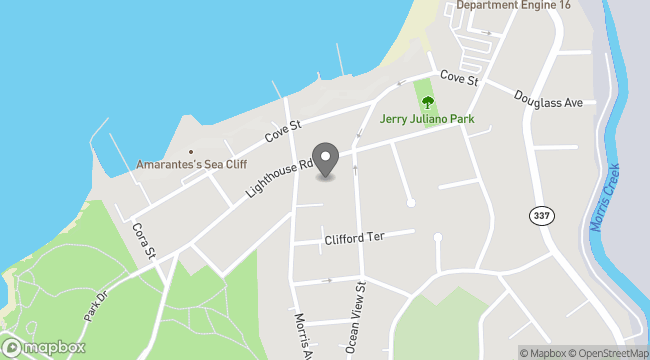
325 Lighthouse RoadNew Haven, Connecticut 06510