This year again, all Valley Talks will be presented in a hybrid format, meaning guests have the option to attend the presentation in person at the Museum or virtually through Zoom. In checkout, make sure to select the correct ticketing option that reflects how you would like to attend the presentation.
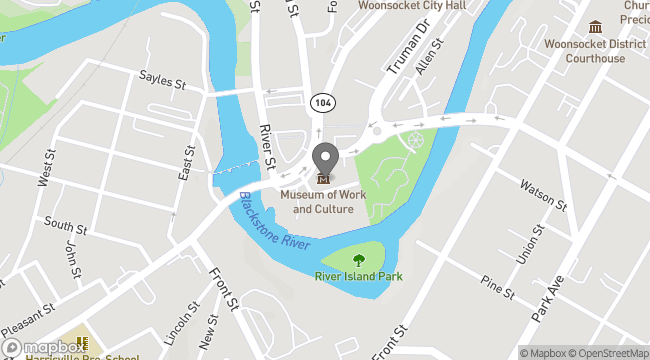
The Museum of Work & Culture, a Rhode Island Historical Society Museum, will host its annual Valley Talks series featuring six free lectures celebrating the Blackstone Valley's history, continuing Sunday, March 8 at 1:30 pm.
At the end of the twentieth century, textile mill closures transformed communities across the United States and beyond. Rewoven, an exhibit by Deborah Baronas, explores this industrial rise and decline through art, film, history, and personal narratives that tell the stories of workers, families, and communities shaped by textile production—and what remains after its loss. Accompanied by the documentary Evolutionary Threads, Rewoven examines how innovation, adaptation, and sustainability are redefining the future of textiles. Through themes of labor, resilience, and renewal, Rewoven invites audiences to consider how the threads of the past continue to shape the fabric of our shared future. Join Baronas as she discusses her exhibit, which will be on display in the museum's Landmark Medical Center Gallery from March 6 to May 16.
Baronas is a multidisciplinary artist whose practice encompasses public art, painting, drawing, and site-specific installations in glass, textiles, and metal. Her work centers on the theme of labor, honoring the resilience and spirit of workers who form the foundation of cultural and economic life—farmers, mill hands, domestic laborers, soldiers, immigrants, and the enslaved. Grounded in her working-class heritage in farming and textiles, Deborah’s process combines archival research, oral histories, and community dialogue. These investigations inform immersive installations and mixed-media works that merge historical narrative with contemporary form. Layered materials—etched glass, laser-cut panels, and translucent fabrics—interact with light and color to animate figures and evoke shifting histories of work and migration. Deborah studied Textile Design and Painting at the Rhode Island School of Design. Before establishing her independent practice, she worked as a designer and creative director in the textile industry in New York, Los Angeles, and Europe. She lives and works in Rhode Island, where she continues to explore connections between shared histories of labor, place, and collective memory.
The Museum’s 2026 Valley Talks series is presented by the Museum of Work & Culture Preservation Foundation and the RI AFL-CIO.