Pop-Up Dinner Ticketing: How to Plan, Price, and Sell Out Your Event
-
 by
by
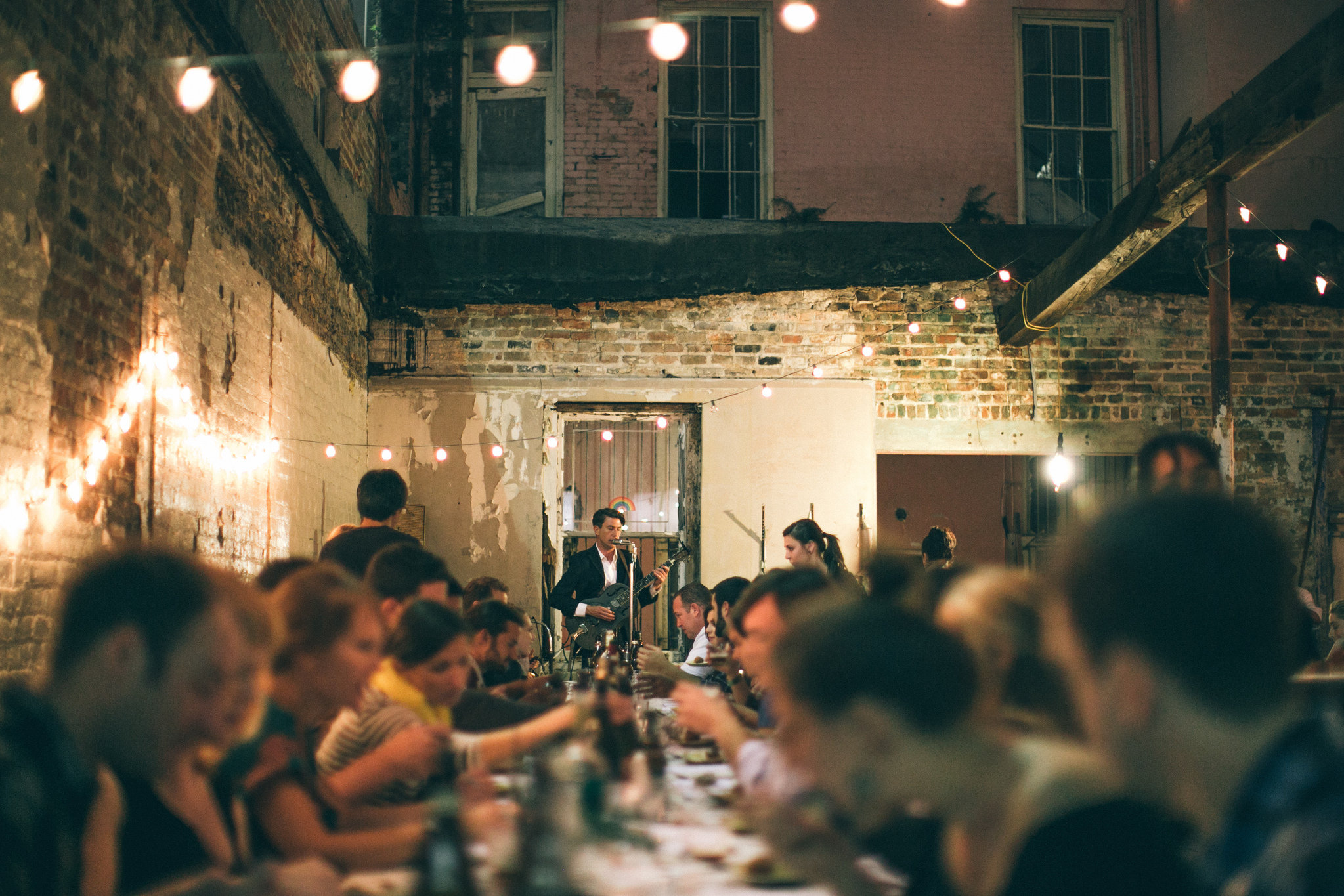
Pop-Up Dinner Ticketing: How to Plan, Price, and Sell Out Your Event
Pop-up dinner ticketing gets messy fast. You have limited seats, dietary needs, no-show risk, and guests who all want the 7:00 PM slot.
The good news is you do not need a complicated system to run it. You need timed entry, clear ticket types, custom checkout questions, and a simple way to manage capacity. That is where SimpleTix can help, especially for food and drink events.
Start your pop-up dinner ticketing setup with the event flow
Before you build the event page, map the night.
Specifically, decide how guests move through the experience. Are they arriving in one wave for a communal dinner? Or are you running four seatings every 45 minutes? That choice shapes pricing, staffing, and check-in.
A simple workflow might look like this:
- 6:00 PM seating — 24 guests
- 7:15 PM seating — 24 guests
- 8:30 PM seating — 24 guests
- 9:45 PM seating — 24 guests
With SimpleTix, you can use General Admission with timed entry and capacity management to cap each seating.
This matters for pop-ups because prime time usually fills first. If you do not set limits by entry time, things can get crowded fast.
Build pop-up dinner ticketing around timed entry, not one big guest list
A lot of organizers still sell pop-up seats as one general pool. That works for a 20-person supper club. However, it gets harder once you have multiple seatings, staggered prep, or different menu windows.
Timed entry can help you stay organized across:
- Kitchen pacing
- Table turns
- Staffing at check-in
For example, if your chef can plate 30 covers every hour, do not release 50 tickets for the same arrival window. Instead, create separate ticket types tied to each seating.
That also makes expectations clearer for guests. They pick a time, pay, and know when doors open.
If you run events across restaurants, wineries, breweries, or tasting rooms, SimpleTix supports businesses in those categories.
Use checkout questions to collect dietary restrictions the right way
This is where pop-up dinner ticketing stops being basic ticketing and starts becoming operations.
Do not ask guests to email dietary restrictions after purchase. Instead, collect that information during checkout with custom attendee questions.
Ask direct questions like:
- “Do you have any food allergies?”
- “Do you need a vegetarian menu?”
- “Do you need a non-alcoholic pairing?”
- “Are you celebrating a birthday or anniversary?”
Keep the questions short. Also, only ask what your team will actually use. If the chef needs final counts 72 hours in advance, set your internal process around that deadline.
A good rule is this: if a response changes prep, staffing, or seating, ask it at checkout.
SimpleTix supports custom attendee questions at checkout, so you can collect those details in one system before guests arrive.
Price for margins, then decide how to handle fees
Pop-ups often get priced backward. Organizers start with what feels reasonable, then realize the menu, labor, rentals, and payment fees leave no margin.
Start with your hard costs first:
- Food and beverage per guest
- Labor per seating
- Rentals, permits, and decor
- Marketing spend
- Payment and ticketing fees
- Cushion for comps, remakes, or no-shows
Then set your ticket price.
If you want to keep pricing simple, build the fee into the ticket. If you want the headline price lower, pass the fee to the buyer. SimpleTix gives you both options, and the pricing is straightforward: $0.79 + 2% per ticket, with no contracts, no subscriptions, and no fees on free events.
Here is a quick example:
- Prix fixe dinner ticket: $85
- Optional wine pairing: $32
- Add-on merch candle: $18
That setup gives you a base ticket plus optional extras.
Make pop-up dinner ticketing work with add-ons and upsells
The easiest extra revenue is usually not another seat. It is a better cart.
For food and drink events, common upsells include:
- Wine or cocktail pairings
- Zero-proof pairings
- Chef’s counter upgrade
- Early access tasting
- Take-home bottle or product
- Branded merch
- Future event presale access
If your checkout only sells one ticket type, you may miss chances to offer add-ons guests actually want.
SimpleTix supports special offers, promo codes, BOGO, and quantity discounts. In addition, if you use Square, the platform supports catalog upsells, which can be useful for packaged goods or add-ons tied to your event flow.
A practical setup might look like this:
Ticket options
- 6:00 PM Dinner Seat — $85
- 7:15 PM Dinner Seat — $85
- 8:30 PM Dinner Seat — $85
Add-ons
- Wine Pairing — $32
- Zero-Proof Pairing — $18
- Signed Menu Card — $10
That gives guests choice without making checkout confusing.
Handle deposits, cancellations, and waitlists before they become a problem
Cancellation policy is not a footnote for pop-ups. It is part of the product.
Because inventory is tight, every empty seat hurts. So be clear on your event page and in your confirmation email. For example: “Tickets are non-refundable within 72 hours of the event, but may be transferred to another guest.”
That kind of policy is usually easier for staff to enforce than vague language.
If you want to take partial commitments first, you can structure your offer around a lower-priced reservation product or early release window. However, keep the buyer terms simple.
For sold-out nights, use a waitlist. SimpleTix includes waitlists for sold-out events, which helps you refill inventory when guests cancel.
You should also turn on reminder emails. People forget niche dining events, especially if they booked weeks ago. Automated reminders can help cut down on missed details and last-minute questions.
Run smoother door operations with mobile check-in
A packed arrival window can wreck the first impression. Guests show up hungry, late, and ready to be seated now. So your check-in process needs to be fast.
SimpleTix includes the Organizer mobile app for iOS and Android. Staff can scan tickets, use scan-only mode, and keep lines moving. In addition, offline scanning mode helps if your venue Wi-Fi is weak or unreliable.
A clean front-door workflow looks like this:
- One staffer checks names or scans mobile tickets
- One staffer handles seating flow
- One floater manages late arrivals and special requests
If you are selling walk-up seats at the door, SimpleTix also supports point-of-sale mode for in-person sales. That can help if you hold back a few seats for day-of traffic.
Promote pop-up dinner ticketing like seats are scarce, because they are
Scarcity works best when it is real.
Do not just post “limited tickets” and hope for the best. Instead, market specific seat counts, time slots, and deadlines. For instance: “Only 8 seats left for the 7:15 PM seating” is stronger than “Selling fast.”
Your basic promo timeline could be:
- 3 weeks out — announce the concept and date
- 2 weeks out — email past guests first
- 10 days out — post menu teaser and pairings
- 7 days out — push the most popular seating
- 3 days out — fill slower time slots
- Day of — promote any last-minute openings
SimpleTix includes email blasts, automated event reminder emails, and abandoned cart recovery emails. According to the Baymard Institute, the average cart abandonment rate remains high across ecommerce, which is why recovery emails are worth using for ticket sales too: Baymard cart abandonment research.
If your event site lives on your own domain, SimpleTix also offers embeddable widgets.
The best pop-up dinner ticketing setup is the one your staff can actually run
Fancy ideas are easy. Clean execution is harder.
So keep your setup tight. Use timed entry for each seating. Ask dietary questions at checkout. Add one or two profitable upsells. Set a clear cancellation policy. Then make sure your check-in team can run the whole thing from a phone.
If you want a simple way to run your next dinner, tasting, or limited-seat food event, SimpleTix offers tools for timed entry, checkout questions, waitlists, and mobile check-in, with pricing at $0.79 + 2% per ticket.
SEO Metadata
- Focus keyphrase: pop-up dinner ticketing
- SEO title: Pop-Up Dinner Ticketing — Sell More Seats
- Meta description: Pop-up dinner ticketing made simple. Learn how to price seats, manage timed entry, collect dietary info, and sell more add-ons.
- Slug: pop-up-dinner-ticketing
- Image alt text: pop-up dinner ticketing dashboard for timed-entry food events
Latest News
Related Articles

Season Ticket Software for Fall 2026: Subscriptions, Reserved Seating & Renewals
-
 by
by
Fall subscription sales are the single biggest revenue moment for most performing arts organizations. Season packages, member renewals, and early access windows all open between July and September. So the season ticket software you pick this summer decides how the fall series actually sells. This guide covers what season ticket software needs to do in 2026, how to configure it for a theater, symphony, or concert series, and what SimpleTix costs for season-driven event programs. What season ticket software actually needs to do Selling season tickets is nothing like selling single-event tickets. First, one subscriber buys 4 to 20 events in a single package. Second, seats need to lock across the entire season. Third, renewals from prior subscribers happen weeks before the general public gets access. And fourth, add-ons like parking, pre-show dinner, and backstage passes attach to the subscription, not the event. So the operational checklist for season ticket software looks like this: Season pass or subscription products that group multiple events into one purchase Reserved seating with locked seats across the whole season, so the subscriber sits in the same seat every night Priority access windows for existing subscribers before general on-sale Payment plans or full-payment options so patrons can split large subscription costs Renewal workflows that let last year's subscribers re-up with one click Comp ticket management for donors, sponsors, and press seats Membership tiers with different pricing, benefits, and priority access Reporting by subscriber, not just by event If your current tool cannot handle these, you are probably running Excel spreadsheets on the side and losing renewals every year. What is season ticket software? Season ticket software is a ticketing platform designed to sell multi-event packages (season subscriptions) alongside individual tickets, with reserved seat continuity, subscriber priority access, and renewal workflows built in. The core difference...

Holiday Event Ticketing Software: Timed Entry, Reserved Seating & Capacity Control for...
-
by
If you run a holiday event, you are booking dates now. So the ticketing platform you pick this month determines how November and December actually go. This guide covers what holiday event ticketing software needs to do in 2026, how to configure it for the season crunch, and what SimpleTix costs for holiday events of any size. What holiday event ticketing software needs to do Holiday events compress a whole year of sales into six weeks. First, most tickets sell in a 4 to 8 week window between mid-November and January 1. Second, weather cancels outdoor events without warning. Third, family groups buy 4 to 8 tickets in one order, not 1. And fourth, capacity is measured per time slot, not per venue. So the ticketing checklist for holiday operators looks like this: Timed entry with per-slot capacity for drive-throughs, walk-throughs, and Santa visits Reserved seating for holiday theater, Nutcracker, and holiday concerts Group and family bundles so a family of six is one checkout, not six Fast scanning at the gate, including offline mode for cold outdoor venues Waitlists for when peak-hour slots sell out Add-ons for hot chocolate, photo packages, VIP tiers, and holiday merch Automated email reminders so guests do not forget their timed slot Same-day payouts to fund the season's operational costs If your current tool cannot do all of that, October is too late to switch. Move now. How do timed entry tickets work for holiday events? Timed entry lets you release a fixed number of tickets per time slot (typically every 15 or 30 minutes) so guests arrive in waves instead of one 6pm surge. For a Christmas light drive-through with a 45-minute route, that usually means 30 to 60 vehicles per 15-minute window. Over a 5-hour evening, you can process 600 to 1,200...
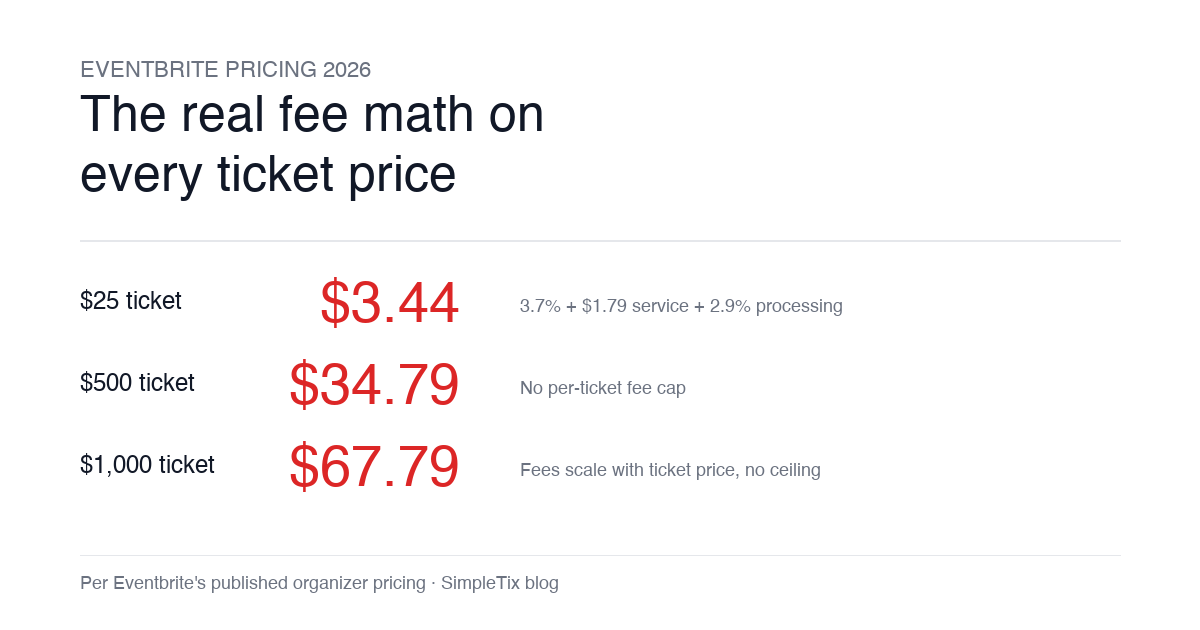
Eventbrite Pricing 2026: Fees, Refunds & What’s Actually Changed
-
by
Eventbrite pricing 2026 is a lot for event organizers to sort through. There are longstanding policies that quietly cost paid-event operators real money, and there is genuine news under new ownership. This guide covers what the fees actually cost you today, what actually changed under the Bending Spoons acquisition, and how the alternatives compare on real numbers. Below is the honest breakdown, sourced to Eventbrite's own pricing page and SEC filings. Eventbrite pricing 2026: current fee structure As of 2026, Eventbrite charges 3.7% + $1.79 per paid ticket for the service fee, plus 2.9% for payment processing. In-person sales carry a $1 + 2.9% fee. There is no per-ticket fee cap. For a quick benchmark of total organizer-side fees: On a $25 ticket, fees total about $3.44 (13.8%) On a $50 ticket, fees total about $5.09 (10.2%) On a $100 ticket, fees total about $8.39 (8.4%) On a $500 ticket, fees total about $34.79 (7.0%) On a $1,000 ticket, fees total about $67.79 (6.8%) The fees scale with ticket price with no ceiling. That is the story for anyone selling premium tickets, season passes, VIP tiers, or corporate packages. Eventbrite pricing 2026: no per-ticket fee cap Eventbrite does not cap total ticket fees. This has been true since 2018, when Eventbrite removed the previous cap during its IPO. For most organizers selling everyday tickets ($20 to $50), the absence of a cap rarely comes up in the math. But for organizers selling premium tickets, the uncapped structure translates into real per-event cost. Take a conference selling three ticket tiers on Eventbrite: $150 general admission: fee about $12.34 (8.2%) $400 VIP ticket: fee about $27.09 (6.8%) $800 sponsor ticket: fee about $50.90 (6.4%) For a 200-person conference with a mix of GA and VIP tickets, that translates into hundreds of dollars...