How To Sell More Event Merchandise Through Your Ticketing Platform
-
 by
by
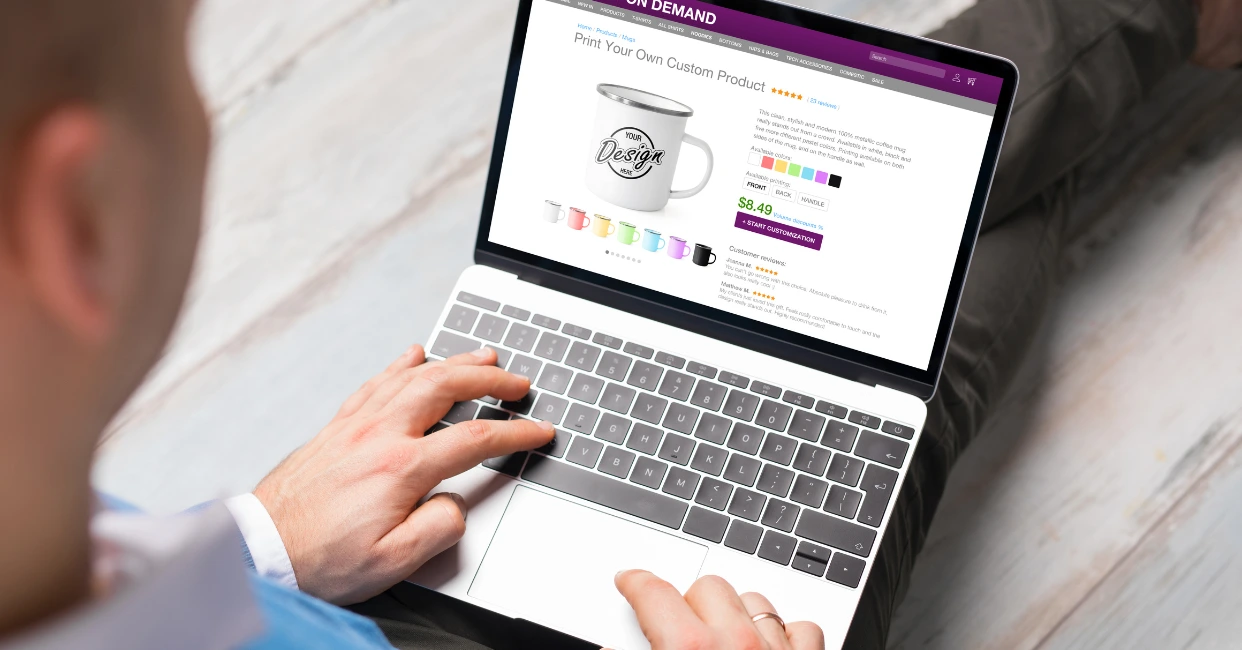
Ever wondered how much revenue you might be leaving on the table by keeping merchandise sales separate from ticketing? When you sell event tickets online, separating merchandise from the purchase flow means missing crucial sales opportunities. Many organizers focus solely on ticket sales, overlooking how the ticketing platform can drive significant merchandise revenue.
From optimizing bundles to leveraging data for personalized offers, using your ticketing platform for merchandise sales isn’t just about convenience—it’s about boosting revenue in ways you may not have considered. Here’s how to do it strategically and effectively.
Bundle Tickets and Merchandise Without Cutting Margins
Bundling tickets with merchandise works best when the pricing feels like a deal to attendees but doesn’t undercut your profits. Success requires precise calculations:
- Analyze price sensitivity: If a ticket costs $50 and a t-shirt costs $25, offering a bundle at $65 can feel like a win for attendees while maintaining a healthy profit margin.
- Test popular combinations: Past sales data might reveal that general admission tickets and t-shirts are the most requested combination, while VIP attendees prefer hoodies or premium items.
Platforms that sell event tickets online can integrate these bundles at checkout, making it easy for attendees to select their preferred option while increasing the overall cart value. Offering bundle discounts as limited-time options further incentivizes purchases during the early ticketing phase.
Digital QR Codes Simplify Pre-Orders
Pre-purchased merchandise often leads to logistical issues at the event. Attendees may receive the wrong size or change their preferences, resulting in returns or exchanges. Issuing QR codes for pre-purchased items can solve these problems. Once an attendee buys a ticket and selects merchandise, a QR code is sent to their email. At the event, they scan the code at the merchandise booth to confirm or adjust their order.
This system allows organizers to reduce waste and stock only what’s needed. Attendees also appreciate the flexibility, as they can finalize their choices on-site without long delays.
Timing Is Everything in Merchandise Sales
When merchandise is offered during the ticketing process can significantly impact sales. Adding items during the ticket checkout process often triggers impulse purchases, especially when promoted as limited-time offers. For example, offering an exclusive event hoodie at a discounted price during the initial ticket sale can capture attention.
Post-purchase emails are another effective way to boost sales. After buying a ticket, attendees can receive an email thanking them for their purchase and offering a chance to pre-order exclusive merchandise. Closer to the event, follow-up messages with limited-stock warnings can create urgency, driving last-minute sales.
Personalizing Merchandise Recommendations
Using attendee data to personalize merchandise offers leads to higher conversions. For instance, ticketing platforms can analyze ticket types and past purchases to suggest relevant items. A general admission ticket holder might be shown affordable options like t-shirts, while VIP attendees are offered premium products such as jackets or collector’s items.
Past behavior is also a valuable indicator. If an attendee purchased a specific item at a previous event, offering them an updated version or a complementary item builds on their existing interest. Personalized suggestions create a more engaging experience and increase the likelihood of a purchase.
Virtual Previews Reduce Buyer Hesitation
Uncertainty about how merchandise looks or fits often prevents attendees from making a purchase. Augmented reality (AR) tools can bridge this gap by allowing buyers to preview items. For example, an attendee could use their phone camera to see how a hat fits or how a t-shirt design looks on them.
Interactive previews also allow attendees to view multiple color options or zoom in on specific details, giving them confidence in their selection. By integrating these tools into the ticketing platform, organizers make the buying process more interactive and satisfying.
Incentivizing Group Merchandise Purchases
Group ticket sales offer a unique opportunity to promote bulk merchandise buys. When groups purchase multiple tickets, platforms can automatically offer discounts on merchandise. For example, a group of five buying tickets might be prompted to add discounted t-shirts for each member.
Tracking individual items within the group order simplifies distribution, ensuring each attendee receives the correct merchandise. This strategy not only boosts overall sales but also streamlines fulfillment, reducing confusion on the event day.
Real-Time Purchase Alerts Drive Sales
Social proof is a powerful motivator for undecided buyers. Real-time purchase alerts during the ticketing process are among the best ways to sell event tickets online, as they show attendees what others are buying and encourage them to act quickly. For example, a notification like “Alex in New York just bought an exclusive event hoodie!” creates urgency and reminds buyers of limited stock.
When combined with scarcity messaging, such as “Only 5 hoodies left in size Medium!” these alerts tap into the fear of missing out, driving additional sales during checkout.
Exclusive Pre-Event Merchandise Access
Offering exclusive merchandise access to ticket holders before general sales opens up new revenue streams and rewards early buyers. Attendees who purchase tickets can receive access to a private merchandise shop with limited-edition items. For example, a ticket holder might be able to pre-order a special festival t-shirt that won’t be available to the general public.
Loyalty Points Encourage Pre-Orders
Rewarding merchandise pre-orders with loyalty points incentivizes attendees to buy early. Platforms that help sell event tickets online can integrate bonus points for items purchased during ticket checkout, making the offer more appealing. For example, an attendee who purchases a ticket and a hoodie together could earn triple points compared to someone buying the hoodie at the event.
Loyalty programs also encourage repeat attendance. Points accumulated from pre-purchased merchandise can be redeemed for discounts at future events, keeping attendees engaged with the brand long-term.
Pre-Event Size Adjustment Portals
Sizing issues are a common challenge with pre-ordered merchandise. Allowing attendees to update their size preferences through an online portal reduces the risk of exchanges and improves the buying experience. For instance, a ticket buyer who initially selected a medium t-shirt can log in and adjust their order to a large before a set cutoff date.
This feature also benefits organizers by ensuring accurate inventory planning. Instead of overproducing sizes, you can stock only what’s needed, reducing waste and simplifying on-site distribution.
Combine Ticket and Merchandise Sales with Simpletix
Selling merchandise through your ticketing platform isn’t just a convenient add-on—it’s an opportunity to increase revenue and provide a better experience for attendees. By bundling items, using QR codes, offering personalized recommendations, and leveraging loyalty programs, you can seamlessly integrate merchandise sales into the ticketing process. These strategies not only drive higher sales but also simplify logistics for both organizers and attendees.
If you’re looking for the best ways to sell event tickets online while boosting merchandise revenue, it’s time to explore a platform that makes it simple and effective. Book a free demo with Simpletix today and see how we can help you combine ticketing and merchandise sales seamlessly to maximize your event’s potential.
Latest News
Related Articles

Season Ticket Software for Fall 2026: Subscriptions, Reserved Seating & Renewals
-
by
Fall subscription sales are the single biggest revenue moment for most performing arts organizations. Season packages, member renewals, and early access windows all open between July and September. So the season ticket software you pick this summer decides how the fall series actually sells. This guide covers what season ticket software needs to do in 2026, how to configure it for a theater, symphony, or concert series, and what SimpleTix costs for season-driven event programs. What season ticket software actually needs to do Selling season tickets is nothing like selling single-event tickets. First, one subscriber buys 4 to 20 events in a single package. Second, seats need to lock across the entire season. Third, renewals from prior subscribers happen weeks before the general public gets access. And fourth, add-ons like parking, pre-show dinner, and backstage passes attach to the subscription, not the event. So the operational checklist for season ticket software looks like this: Season pass or subscription products that group multiple events into one purchase Reserved seating with locked seats across the whole season, so the subscriber sits in the same seat every night Priority access windows for existing subscribers before general on-sale Payment plans or full-payment options so patrons can split large subscription costs Renewal workflows that let last year's subscribers re-up with one click Comp ticket management for donors, sponsors, and press seats Membership tiers with different pricing, benefits, and priority access Reporting by subscriber, not just by event If your current tool cannot handle these, you are probably running Excel spreadsheets on the side and losing renewals every year. What is season ticket software? Season ticket software is a ticketing platform designed to sell multi-event packages (season subscriptions) alongside individual tickets, with reserved seat continuity, subscriber priority access, and renewal workflows built in. The core difference...

Holiday Event Ticketing Software: Timed Entry, Reserved Seating & Capacity Control for...
-
by
If you run a holiday event, you are booking dates now. So the ticketing platform you pick this month determines how November and December actually go. This guide covers what holiday event ticketing software needs to do in 2026, how to configure it for the season crunch, and what SimpleTix costs for holiday events of any size. What holiday event ticketing software needs to do Holiday events compress a whole year of sales into six weeks. First, most tickets sell in a 4 to 8 week window between mid-November and January 1. Second, weather cancels outdoor events without warning. Third, family groups buy 4 to 8 tickets in one order, not 1. And fourth, capacity is measured per time slot, not per venue. So the ticketing checklist for holiday operators looks like this: Timed entry with per-slot capacity for drive-throughs, walk-throughs, and Santa visits Reserved seating for holiday theater, Nutcracker, and holiday concerts Group and family bundles so a family of six is one checkout, not six Fast scanning at the gate, including offline mode for cold outdoor venues Waitlists for when peak-hour slots sell out Add-ons for hot chocolate, photo packages, VIP tiers, and holiday merch Automated email reminders so guests do not forget their timed slot Same-day payouts to fund the season's operational costs If your current tool cannot do all of that, October is too late to switch. Move now. How do timed entry tickets work for holiday events? Timed entry lets you release a fixed number of tickets per time slot (typically every 15 or 30 minutes) so guests arrive in waves instead of one 6pm surge. For a Christmas light drive-through with a 45-minute route, that usually means 30 to 60 vehicles per 15-minute window. Over a 5-hour evening, you can process 600 to 1,200...
Eventbrite Pricing 2026: Fees, Refunds & What’s Actually Changed
-
by
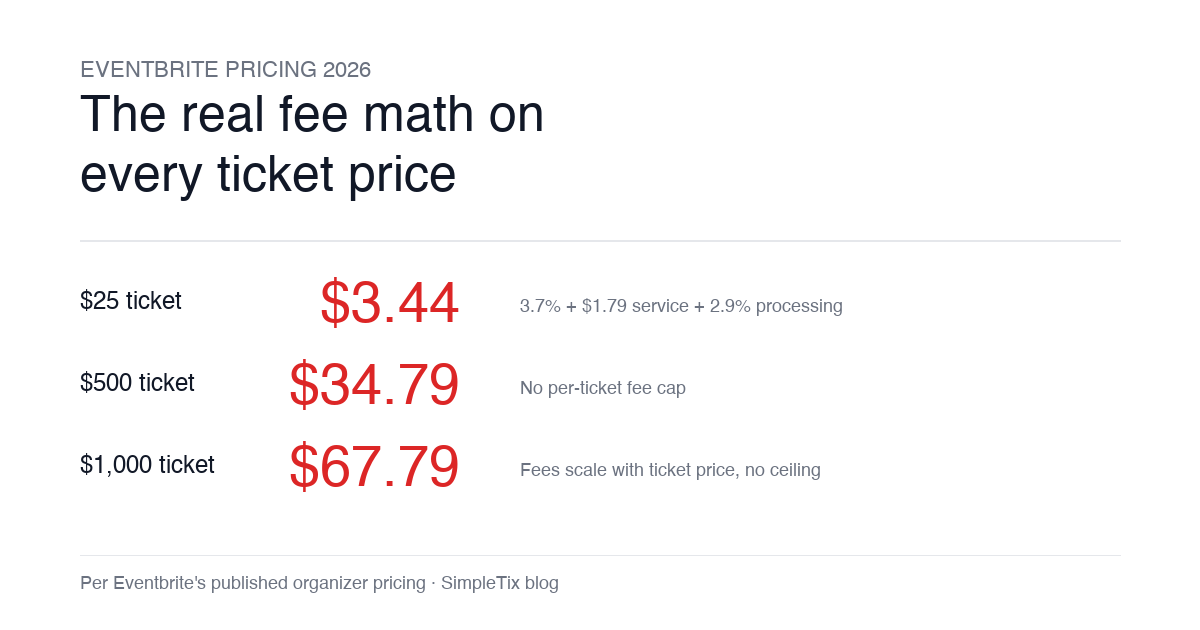
Eventbrite pricing 2026 is a lot for event organizers to sort through. There are longstanding policies that quietly cost paid-event operators real money, and there is genuine news under new ownership. This guide covers what the fees actually cost you today, what actually changed under the Bending Spoons acquisition, and how the alternatives compare on real numbers. Below is the honest breakdown, sourced to Eventbrite's own pricing page and SEC filings. Eventbrite pricing 2026: current fee structure As of 2026, Eventbrite charges 3.7% + $1.79 per paid ticket for the service fee, plus 2.9% for payment processing. In-person sales carry a $1 + 2.9% fee. There is no per-ticket fee cap. For a quick benchmark of total organizer-side fees: On a $25 ticket, fees total about $3.44 (13.8%) On a $50 ticket, fees total about $5.09 (10.2%) On a $100 ticket, fees total about $8.39 (8.4%) On a $500 ticket, fees total about $34.79 (7.0%) On a $1,000 ticket, fees total about $67.79 (6.8%) The fees scale with ticket price with no ceiling. That is the story for anyone selling premium tickets, season passes, VIP tiers, or corporate packages. Eventbrite pricing 2026: no per-ticket fee cap Eventbrite does not cap total ticket fees. This has been true since 2018, when Eventbrite removed the previous cap during its IPO. For most organizers selling everyday tickets ($20 to $50), the absence of a cap rarely comes up in the math. But for organizers selling premium tickets, the uncapped structure translates into real per-event cost. Take a conference selling three ticket tiers on Eventbrite: $150 general admission: fee about $12.34 (8.2%) $400 VIP ticket: fee about $27.09 (6.8%) $800 sponsor ticket: fee about $50.90 (6.4%) For a 200-person conference with a mix of GA and VIP tickets, that translates into hundreds of dollars...